

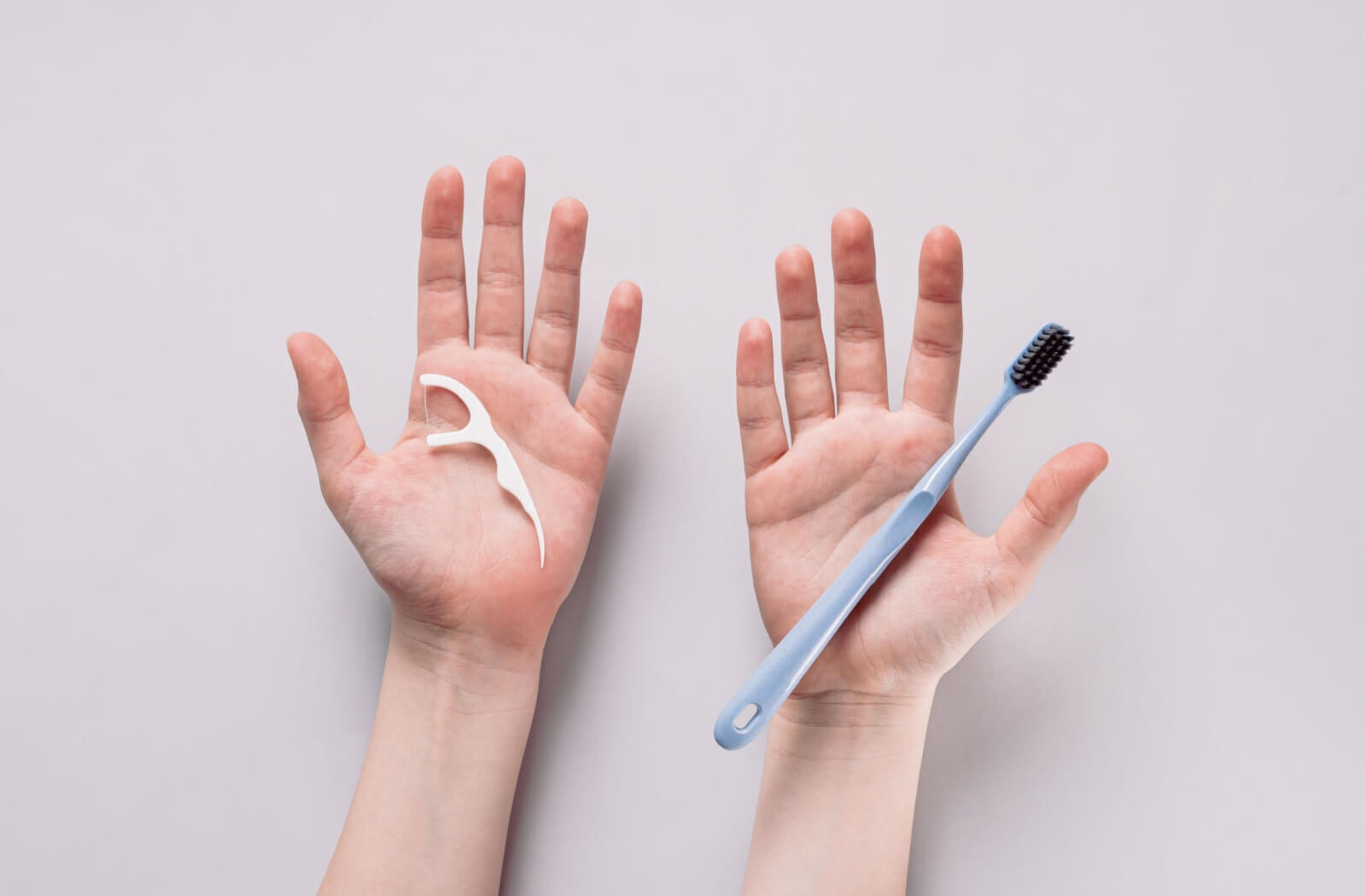
Your daily routine for keeping your teeth clean is the foundation of a healthy smile. But have you ever stopped to wonder if you are doing it in the right order? Our team at Orthodontic Smile Studio is often asked when the right time to floss is: Before or after brushing?
While cleaning your teeth every day is what matters most, flossing before brushing is more effective for a healthy smile. This simple switch in your routine can help you get a more thorough clean every day.
The Big Question: Floss Before or After You Brush?
When you floss first, you clear the way for your toothbrush and toothpaste to do their job. Think of it as tidying a room before you deep clean it. Flossing dislodges food particles and plaque stuck between your teeth and along your gumline, which are places your toothbrush bristles have a hard time reaching.
Why Flossing First Works
Flossing first loosens up the plaque hiding between your teeth. When you brush afterward, you can sweep away that loosened debris more easily. This process helps remove more plaque than brushing alone.
Another benefit is that it helps the fluoride in your toothpaste reach more of your tooth’s surface. With the plaque and food bits gone, fluoride can reach the tight spaces between your teeth, strengthening your enamel and protecting your smile.
Create Your Daily Smile Routine
A consistent routine is your foundation for a healthy mouth, and it doesn’t have to be complicated. Taking a few minutes each day to care for your teeth and gums can help you avoid problems and feel good about your smile.
A Simple Guide
For a complete clean, you can follow these simple steps every day. This routine helps to cover all the bases for your oral health.
- Floss: Start by clearing away the plaque and food particles from between your teeth.
- Brush: Use a fluoride toothpaste and brush gently for a full 2 minutes.
- Tongue: Gently clean your tongue with your toothbrush or a tongue scraper.
- Rinse: You can finish with a mouthwash to rinse away any remaining particles.
The 2-2-2 Rule of Thumb
A helpful way to remember the basics of dental care is the 2-2-2 rule. Though it is a generalization, it’s designed to be an easy-to-follow guide that can make a big impact on your oral health. Remember to:
- Brush 2 times a day
- Brush for 2 full minutes each time
- Visit your dentist 2 times a year
How to Brush & Floss
Using the correct tools and techniques is just as important as the routine itself. Gentle motions help protect your gums from damage, while proper form helps you clean every surface. This is especially important if you need to floss around braces or other orthodontic appliances.
How to Brush
Your brushing technique can make a difference. To get the most out of each session, you can try these simple tips:
- Use a toothbrush that has soft bristles to be gentle on your gums.
- Hold the brush at a 45-degree angle toward your gumline.
- Use small, gentle, circular motions to clean your teeth.
How to Floss
Flossing correctly helps you remove plaque without irritating your gums. A little practice is all it takes to get the hang of it. Make sure to:
- Wrap about 18 inches of floss around your fingers and curve it into a “C” shape around each tooth.
- Slide the floss gently up and down, going slightly below the gumline.
- Use a fresh section of floss for each tooth to avoid spreading plaque around.

Common Brushing & Flossing Questions
When you start a new flossing habit or focus more on your technique, you might have a few questions. It’s common to notice new sensations in your mouth, but consistency is often the key to moving past them.
How Do You Know if You Brush Too Hard?
Brushing with too much force can harm your teeth and gums over time. You might be brushing too hard if you notice these signs:
- Your gums feel sore, look red, or bleed after brushing.
- Your teeth start to feel more sensitive to hot or cold temperatures.
- The bristles on your toothbrush look flat and frayed quickly.
What if Your Gums Bleed When You Floss?
Seeing a little blood when you first start flossing regularly can be surprising, but it’s often a sign that your gums are not yet used to the cleaning. This usually stops within a week or so as your gums get healthier. Continue to floss gently and consistently each day, but if it persists or worsens after about a week, it’s a good idea to contact your dentist.
Keep Your Smile Healthy for Life
Your daily habits are your first line of defence for a healthy smile. Our team is here to support your at-home habits with professional care, providing you with a total approach to your oral health.
Your Role in a Healthy Smile
You have a powerful role in keeping your smile bright and healthy. By brushing and flossing every single day, choosing tooth-friendly foods, and paying attention to any changes in your mouth, you can keep your smile healthy for the long term.
The Role of Your Dental Team
Your dental team is here to support your efforts. Regular check-ups and cleanings help maintain your oral health and address any concerns early on. Our team can also offer personalized advice tailored to your specific needs. Your dentist in Kitchener can be a partner in your journey to a healthy smile.
Schedule Your Next Visit
A great smile starts with simple, daily habits. For personalized care and guidance on your oral health journey, our friendly team at Orthodontic Smile Studio is ready to help you and your family. Schedule a visit today.