

Key Takeaways
- Early orthodontic treatment can help guide jaw growth before all adult teeth arrive.
- Crossbites, crowding, and jaw shifting are worth a closer look.
- Thumb sucking past age 5 and mouth breathing at night can be signs.
- Age 7 is a common time for a first orthodontic check.
- A first visit doesn’t mean braces right away.
- Some children only need periodic monitoring as they grow.
Small Clues in Your Child’s Smile
You notice things other people miss. The way your child chews on one side of their mouth. The clicking sound when they yawn at the breakfast table. The front teeth that seem to be racing each other for space.
Signs your child may need early orthodontic treatment include crossbites, crowded teeth, jaw shifting or clicking, baby teeth lost too early or too late, thumb sucking past age 5, mouth breathing at night, and trouble chewing or speaking clearly. Catching these patterns early gives a dentist in Kitchener, ON more options for how to help. The team at Orthodontic Smile Studio sees these clues often, and orthodontic care for children starts with a simple look at how everything fits together.
What Early Orthodontic Treatment Means for Your Child
Early orthodontic treatment happens while your child still has a mix of baby and adult teeth. Instead of straightening a full set of adult teeth, the focus is on guiding jaw growth and making room for teeth that haven’t come in yet. That’s where two-phase treatment often comes in.
That makes it different from the braces you might picture on a teenager. The goal at this stage is the bite, the spacing, and the room available, not the final polish. The American Association of Orthodontists shares similar guidance for parents weighing timing.
Signs to Watch for at Home
Bite & Jaw Clues
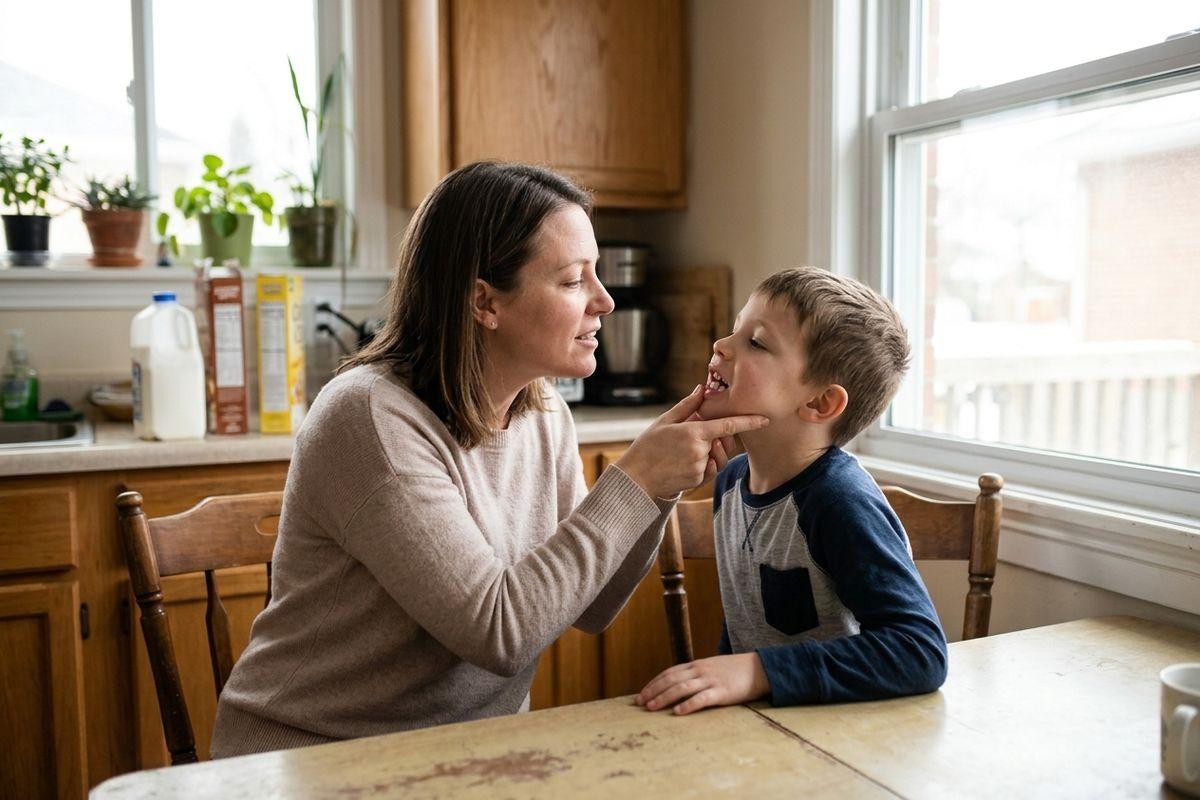
Ask your child to bite down gently and take a look. You may spot a crossbite, an underbite, or an overbite where the top and bottom teeth don’t meet the way you’d expect.
- A crossbite, underbite, or overbite you can see when the teeth close
- A jaw that shifts to one side or clicks when your child opens wide
- Cheek biting during meals, often on the same spot every time
Tooth & Spacing Clues
Teeth tell their own story as they come in. Crowding and common bite problems tend to show themselves once adult teeth start arriving.
- Crowded or overlapping teeth, especially in the lower front
- Baby teeth that fall out much earlier or later than expected
- Front teeth that stick out past the lower ones
Habits & Daily Function
Some signs show up in everyday routines rather than in the mirror. You might hear them at night or notice them at dinner. Mouth breathing in particular can be connected to breathing and airway concerns.
- Thumb sucking that continues past age 5
- Mouth breathing or snoring during sleep
- Trouble chewing, biting into food, or forming certain sounds

Why Age 7 Is a Common Time for a First Check
Around age 7, most children have a mix of baby and adult teeth. That combination shows patterns a dentist can read, like whether there’s enough room coming for the teeth still on the way. Orthodontic guidelines point to this same window for a first evaluation.
An earlier visit is fine if something seems off before then. You don’t have to wait for a birthday to ask a question, and reading through how old your child needs to be for braces can help you decide.
And a check-up doesn’t mean braces right away. Many first visits end with a plan to watch and check back.
Early Care Versus a Wait & Watch Plan
Not every child who comes in needs treatment. Some only need periodic monitoring while their jaw and teeth keep developing, with a quick look every several months. The benefits of early orthodontic treatment often come down to timing rather than hardware.
Crossbites and jaw shifting are the kinds of things reviewed sooner rather than later. A palatal expander is one option that can create room while the jaw is still growing. When early care is recommended, braces later on may be shorter and simpler than they would have been otherwise.
What Happens at Your Child’s Orthodontic Visit
The first appointment is calmer than most parents expect. Your child sits in the chair, and the team walks through each step before doing it, much like any office visit you’ve been through before.
- The dentist looks at the teeth, the bite, and how the jaw moves.
- Digital scans or X-rays are taken if they’re needed to see what’s happening under the gums.
- You talk through timing, options, and what to watch for at home.
You leave knowing where things stand, even if the answer is simply to check again in six months.
If you’ve noticed any of these signs, the team at Orthodontic Smile Studio can take a look and help you understand what your child’s smile needs right now. Book a visit and bring your questions along.


