

Key Takeaways
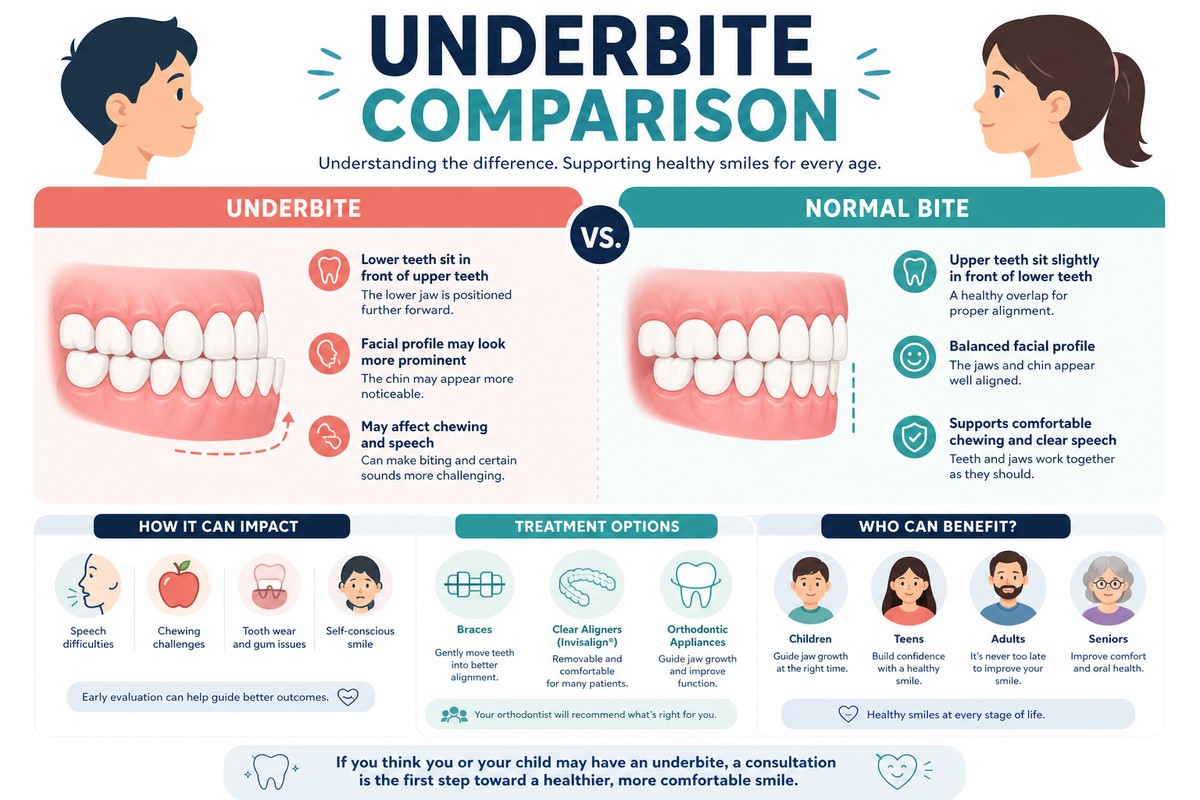
- An underbite happens when your lower teeth sit ahead of your upper teeth.
- Some underbites come from tooth position, others from jaw structure, and some from both.
- Family jaw shape, uneven jaw growth, and habits like thumb sucking can play a role.
- An exam with digital X-rays and 3D scans helps sort out the cause.
- Braces, clear aligners, growth appliances for kids, and jaw surgery for severe cases are options.
- A first orthodontic check by age 7 opens up more choices while jaws are still growing.
Underbites Explained in Plain Language
You smile in a photo and notice your bottom teeth showing more than your top ones. Or maybe your child bites down and the front teeth meet in a way that looks backwards. If you’ve been wondering whether an underbite needs attention, an assessment at Orthodontic Smile Studio can clarify what’s happening and what options may fit.
An underbite is a bite where your lower teeth sit in front of your upper teeth when your mouth closes, and it can come from tooth position, jaw structure, or a combination of the two. Knowing which one applies helps determine what comes next, and a complimentary consultation is a good place to begin.
What an Underbite Looks Like
The clearest sign shows up when you close your mouth. Your lower teeth land ahead of the upper ones instead of tucking behind them. Underbites range from mild, where only a tooth or two overlaps the wrong way, to noticeable, where the lower jaw or chin appears to sit further forward than the rest of your face. It’s one of the common bite problems that orthodontists see.
Signs You Can Watch For
Some people live with an underbite for years without much trouble. Others notice it every day.
- Trouble biting into food or chewing comfortably
- A lisp or difficulty with certain sounds
- Jaw soreness
- Uneven wear across your teeth
Dental vs. Skeletal Underbites
A dental underbite comes down to where the teeth sit. A skeletal underbite involves the shape and position of the jaws themselves. Plenty of cases fall somewhere in the middle, with both tooth position and jaw structure involved. The distinction matters because it changes which treatments fit, much like the way an overbite is assessed and treated.
What Causes an Underbite
Family traits carry a lot of weight here. Jaw shape and bite patterns often run through generations, which is why a parent with an underbite may see something similar in a child. Similar hereditary factors can also contribute to crooked teeth.
Uneven growth also plays a part. When the upper and lower jaws grow at different rates, the bite can end up out of line. Early childhood habits, including thumb sucking, long-term pacifier use, and tongue thrusting, can add pressure that shifts how teeth and jaws settle. Some of these habits are also addressed through myofunctional therapy.
Do Underbites Change Over Time?
Yes, especially during childhood. Jaw growth can shift alignment from year to year, so a mild underbite at age six may look different at age ten. Over time, an underbite may contribute to tooth wear or discomfort. Similar concerns can occur with other forms of malocclusion.
How an Orthodontist Checks Your Bite
The visit is straightforward, and nothing about it should feel rushed. The team walks you through each step so you know what’s happening and why.
- An exam of how your upper and lower teeth fit together when you bite down
- Digital X-rays that show bone and tooth roots
- Photos along with 3D digital scans or impressions of your teeth

Why the Exam Matters
An orthodontist can distinguish between a dental cause and a skeletal one. That answer shapes which treatment options make sense for you, and it saves you from starting down a path that was never the right fit.
Treatment Options for an Underbite
Braces & Clear Aligners
Braces apply steady pressure that moves teeth into better positions over time. Elastics may be added to help guide the jaw. For mild to moderate cases, Invisalign clear aligners can be a fit, which appeals to teens and adults who’d rather skip visible brackets.
Growth Appliances for Kids
While a child’s bones are still developing, a palatal expander paired with reverse-pull headgear can help guide upper jaw growth. That window doesn’t stay open forever, which is one reason early checks are worth the appointment.
Jaw Surgery for Severe Cases
When the jaws sit far out of position, surgery becomes part of the conversation. It’s done after jaw growth finishes and paired with orthodontic care both before and after. That way the teeth and jaws work together once everything settles.
Underbite Care for Kids, Teens & Adults
A first orthodontic check around age 7 gives the orthodontist a look at how the jaws are developing. Growing jaws allow for more treatment choices, since appliances can work alongside natural growth, which is the idea behind two-phase treatment.
Adults aren’t out of options. Plans tend to be more involved because the jaws have finished growing. Many adults still see meaningful improvement in comfort and bite function through adult orthodontic care.
Can It Be Fixed Without Surgery?
Many mild cases are treated without surgery using braces or aligners. An evaluation is what tells you which category you fall into, rather than guessing based on how it looks in the mirror.
Take the Next Step Toward a Comfortable Bite
If your bite feels off, or you’ve noticed your child’s lower teeth sitting forward, an exam can give you real answers instead of guesswork. The team at Orthodontic Smile Studio takes time to explain what they see and which options fit your situation. Call to book an evaluation and get started.


